
Is Zemun a good area to stay in Belgrade?
Yes — if you want a different relationship with the city. Zemun feels older, more riverside and more self-contained than New Belgrade, while being less dominated by major tourist landmarks than Stari Grad.
It is particularly strong for couples, repeat visitors, longer stays and travelers who like ending the day beside the river rather than returning to the busiest central streets.
You want Belgrade at a slower pace
Old streets, the Danube, Gardoš and long riverside walks matter more to you than having Knez Mihailova outside the door.
This is a short first trip
Go with Stari Grad when classic landmarks and first-trip sightseeing convenience come first.
Zemun is most rewarding when you treat it as its own destination, not as a quick add-on after New Belgrade. Give the old core, Gardoš and the quay enough time to connect naturally.
Start with Gardoš
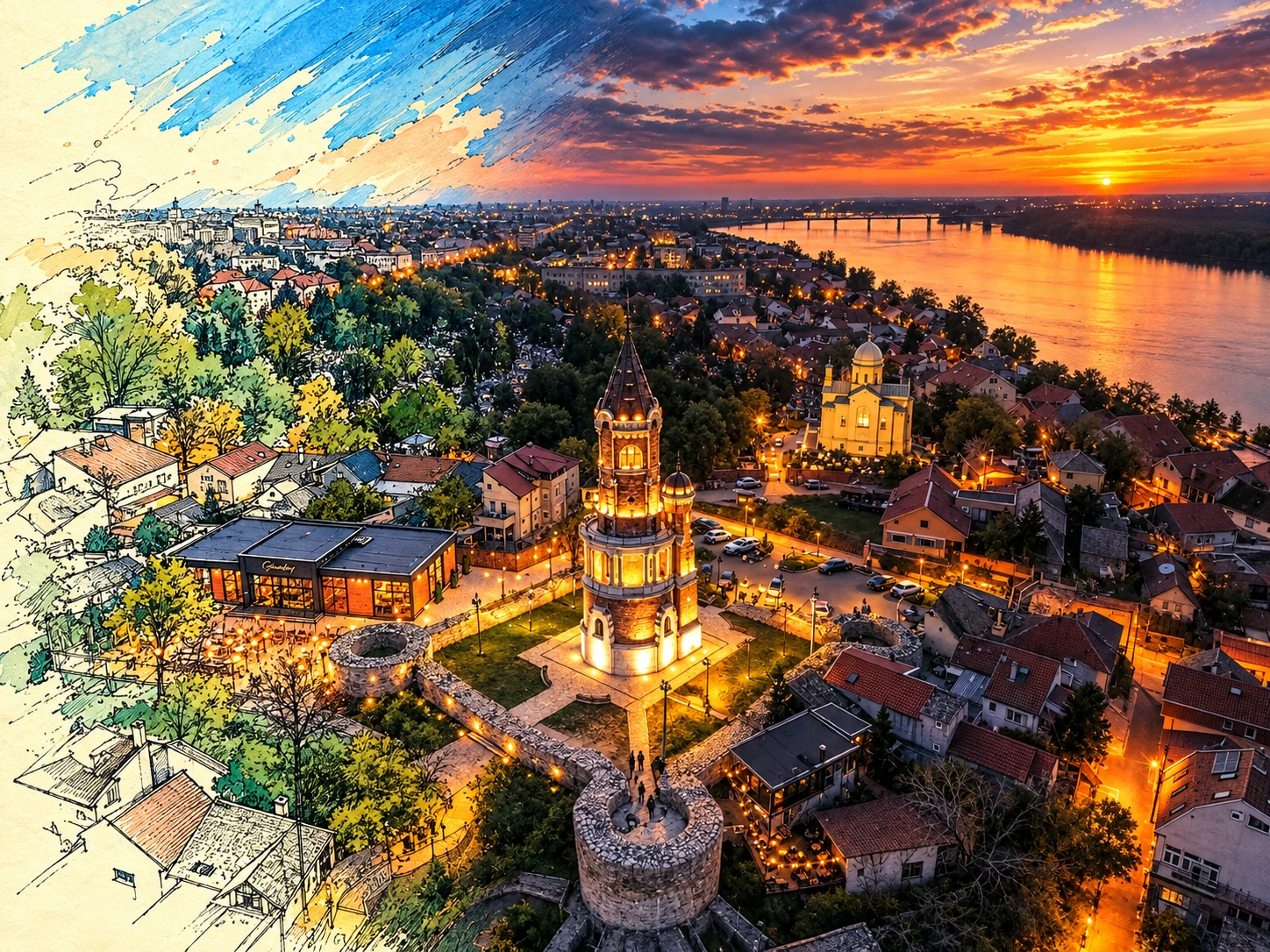
Gardoš is the clearest symbol of Zemun and one of the best places to understand why this part of Belgrade feels historically separate from the rest of the city. The hill carries some of the oldest settlement layers in the area, while the Millennium Tower became the visual landmark visitors recognize today.
The climb also changes the way you read Zemun. From the hill, the old roofline, churches, river and newer city beyond all sit in one view.
Gardoš is uphill. If steep streets are difficult for you, plan the ascent rather than assuming Zemun is one completely flat riverside walk.
Walk down through Old Zemun
The historic core below Gardoš is where Zemun’s “city within the city” feeling becomes obvious. Narrower streets, old houses, churches and small squares create a scale that feels different from both Stari Grad and New Belgrade.
Zemun was a separate town until it became administratively part of Belgrade in 1934. That history still matters because the old center developed with its own river, border and Central European urban context.
Do not rush directly from Gardoš to the quay. The old streets and squares between them are the part that makes Zemun feel like more than a viewpoint plus a riverside promenade.
Use the market and central squares as your local layer
Zemun’s old center is built around several small squares rather than one monumental plaza. The market area adds everyday movement to the historic setting and keeps the center useful to local residents, not only visitors.
This is a good place to slow down between Gardoš and the river: coffee, market activity and smaller streets give the route a more local middle section before you reach the open quay.
Leave one stop unplanned here. Zemun works better when lunch, coffee or a market detour happens naturally instead of being scheduled like another attraction.
Finish on the Zemun Quay
The Danube quay is the natural finish to a Zemun walk. After the tighter streets of the old core, the river opens the neighborhood out into a long promenade with restaurants, benches, boats and wide views across the water.
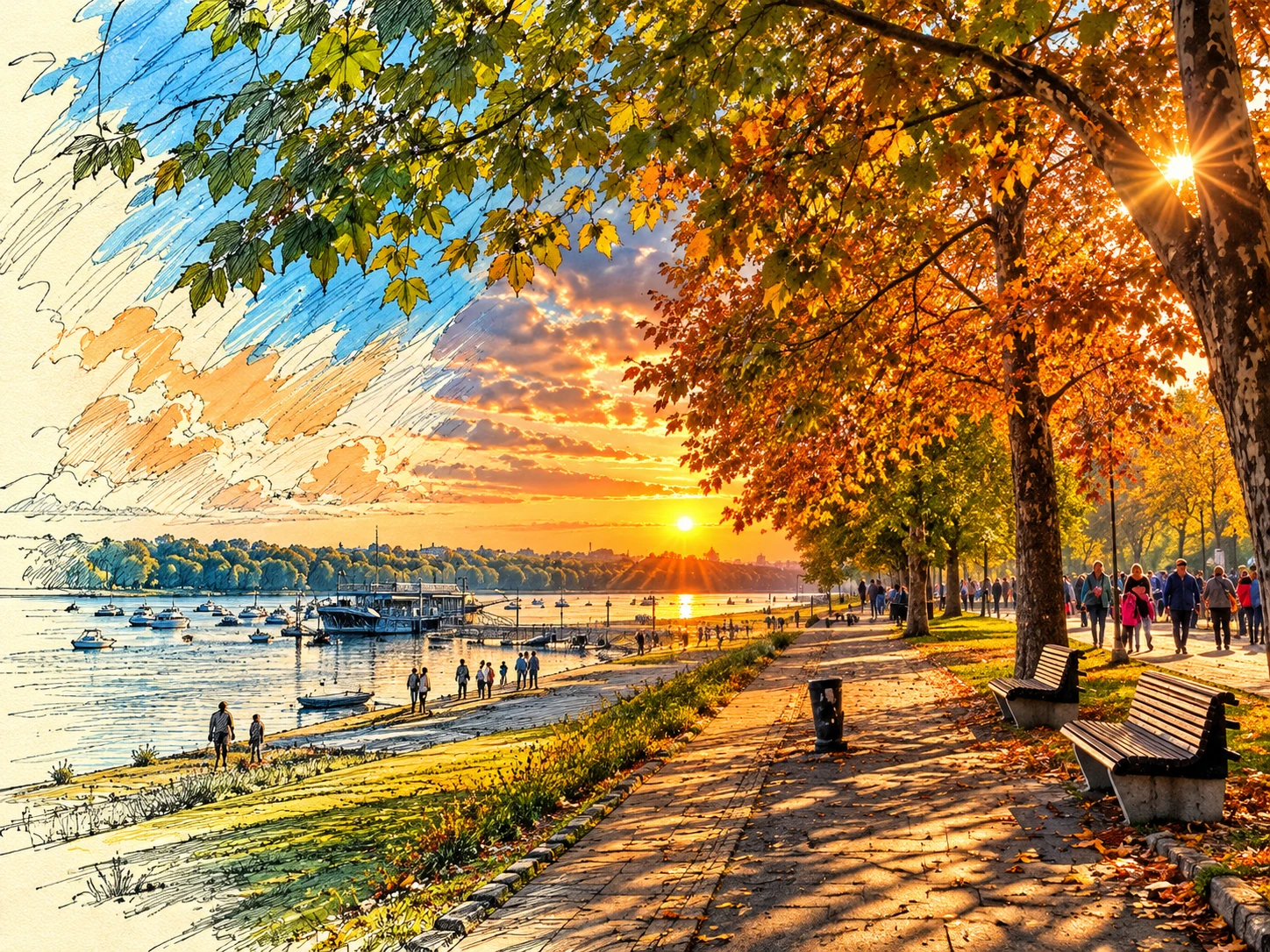
You do not need a complex itinerary here. Walk until the pace feels right, stop for a drink or meal, and let the river become the main event.
Zemun is not only historic because of its buildings. The Danube shaped its role as a settlement, port and town long before it became part of modern Belgrade.
Lido: Zemun’s summer escape on Great War Island
Just across the Danube from Zemun Quay, Lido is the sandy bathing area on the northern tip of Great War Island. For generations of Zemun residents, it has been the neighborhood’s summer escape: part beach, part picnic ground and part ritual of leaving the city without really leaving Zemun.
The name is widely documented as a reference to the famous Italian Lido near Venice. Local history also preserves another story: that a boat called Lido, once used to carry bathers across the river, may have helped fix the name in local memory.
The beach is also a gateway to the protected landscape of Great War Island. In summer 2026, official guided ecological walks on the island started from the Lido side, adding a nature layer to what many visitors first see simply as Zemun’s beach.
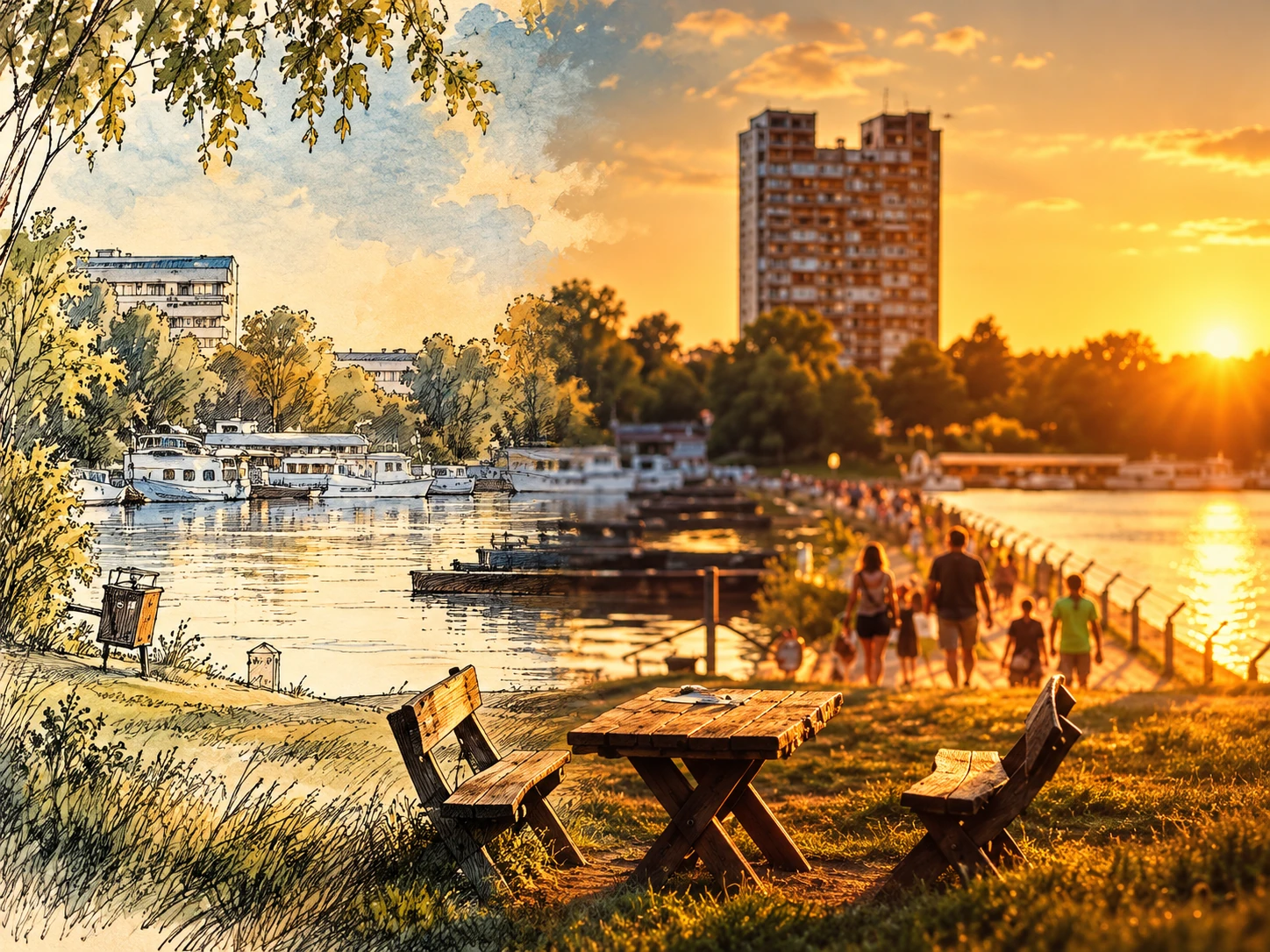
Lido shows that Zemun’s relationship with the Danube is not only scenic. The river is part of everyday local recreation, summer culture and the identity of the neighborhood.
Treat Lido as a summer option, not a year-round guaranteed crossing. In the 2026 season, a temporary pontoon bridge connected Zemun Quay with Lido from 1 July, but access arrangements are seasonal and should always be checked on the official Zemun or City of Belgrade websites before you go.
If the seasonal crossing is open, Lido works best as an optional extension after the quay rather than as the main reason for a short first visit to Zemun.
Choose your Zemun visitor zone
Zemun is compact enough to feel coherent, but your experience still changes depending on whether you stay near Gardoš, the central squares or the Danube.
Gardoš
Best for the tower, old streets, historic atmosphere and the strongest visual identity of Zemun.
Old town & central squares
Choose this area when you want cafés, market life, the old core and an easy walk both uphill to Gardoš and down to the river.
Zemun Quay
Best if long river walks, restaurants and a relaxed open-air mood matter more than being inside the tightest historic streets.
Market side
A useful choice for everyday movement, food stops and a stay that still feels connected to the old center.
Zemun + New Belgrade
Pair historic Zemun with New Belgrade when you want the strongest contrast in urban form and twentieth-century city history.
How much time do you have?
Choose your time and the kind of Zemun you want. We’ll build an instant route through the same places used throughout this guide.
Your Zemun route
Who should stay in Zemun?
One of Belgrade’s strongest evening settings
Old streets, Gardoš and the Danube make Zemun especially good for slower shared city breaks.
See Belgrade from another historical angle
If you already know the central core, Zemun gives you a different urban history and a more self-contained identity.
Build the day around the Danube
The quay supports long walks, traditional food stops and evenings where the river matters more than the next landmark.
Old Belgrade is not the only historic Belgrade
Gardoš, old Zemun and the town’s separate historical development add context that the central city alone cannot give you.
Pros and cons of staying in Zemun
Why stay here
- Distinct historic identity and strong local atmosphere.
- Gardoš and the old town create a memorable visitor experience.
- Long Danube promenade for walking, food and slower evenings.
- Excellent contrast with New Belgrade and the central city.
- Strong choice for repeat visitors and longer stays.
What to consider
- Farther from the classic Stari Grad sightseeing core.
- Gardoš adds uphill walking.
- Your exact location matters if you want both the old core and the quay close by.
- Seasonal river activities can change.
- A short first trip may be more efficient from central Belgrade.
Where to stay in Zemun
For the best overall Zemun experience
Choose the central historic area when you want Gardoš, the market, old streets and the quay to connect naturally.
For history and atmosphere
Best when the hill, tower and old streets are the emotional center of your stay.
For the Danube
Choose this area when river walks, restaurants and open-air evenings matter more than staying inside the old streets.
For mixed practical access
Consider this direction if your trip combines Zemun with business, events or frequent movement through New Belgrade.
“Zemun” covers much more than the historic visitor core. Check the exact address and make sure it matches the Zemun experience you actually want.
Choose your base in Zemun
Choose Zemun for its own neighbourhood rhythm and riverside context. Balance that preference against journeys to the other parts of Belgrade you plan to visit.
Zemun, Stari Grad or New Belgrade?
Classic sightseeing
Start with Stari Grad for the Fortress, Knez Mihailova and the historic central core.
Historic Danube atmosphere
Start with Zemun. Focus on Gardoš, the old streets, market and quay.
Modern Belgrade
Continue to New Belgrade for modernist planning, business districts, Sava Center and the Arena.
Zemun + New Belgrade
The contrast between historic Zemun and planned twentieth-century New Belgrade makes them especially useful together.
Frequently asked questions
Is Zemun a good area to stay in Belgrade?
Yes. It is especially strong for travelers who want the Danube, old streets, local history and a slower pace than the main sightseeing core.
What is Zemun best known for?
Gardoš and the Millennium Tower, the old historic core, the Danube quay and Zemun’s distinctive identity as a former separate town.
Is Zemun walkable?
The visitor core is very walkable, but Gardoš involves an uphill section and the wider municipality extends much farther than the old town.
How much time should I spend in Zemun?
Two hours is enough for an essentials route, half a day is ideal, and a full day works well when you want a long river stop, food and a slower pace.
Is Zemun the same as New Belgrade?
No. Zemun is historically much older and has a different urban form, architecture and Danube-town atmosphere.
Stable historic and geographic information is separated from details that can change. Check current tower access, events, seasonal Lido connections and temporary riverfront works before making them essential to your itinerary.
Sources & editorial notes
- Official: Tourist Organization of Belgrade — Zemun, Gardoš, old Zemun and Zemun Quay.
- Official: Municipality of Zemun — history, cultural monuments and Gardoš context.
- Official seasonal access: Municipality of Zemun / City of Belgrade — Lido pontoon bridge and summer bathing season.
- Secondary historical context: RTS / Politika — Lido name and local bathing tradition.
- Seasonal information such as Lido access should always be checked close to travel dates.