
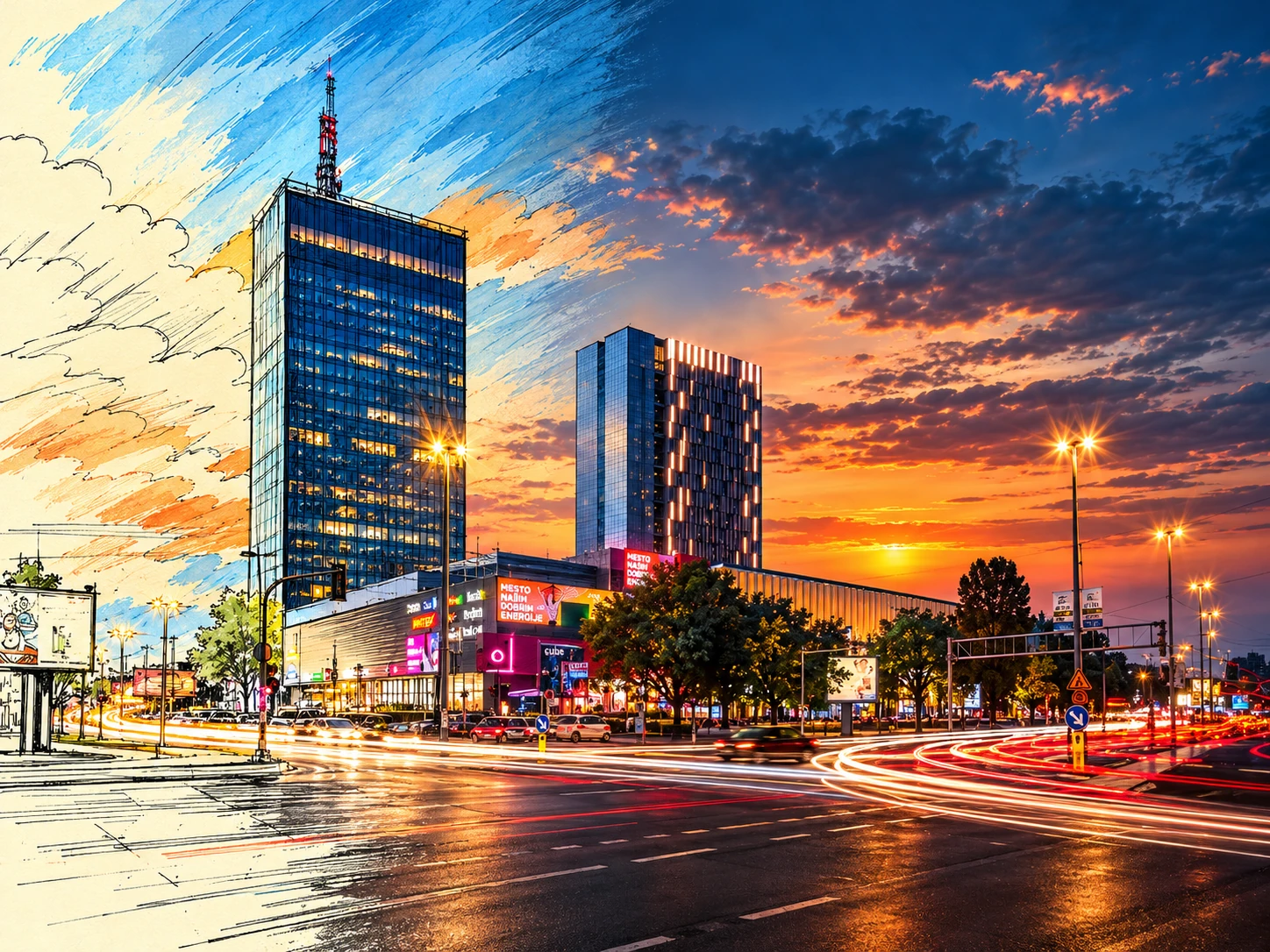
Is New Belgrade a good area to stay in Belgrade?
Yes — particularly if your trip revolves around business, a conference, a concert or sporting event, or if you simply prefer newer hotels, wider streets and a more contemporary city environment.
New Belgrade is not the obvious choice for everyone. If you want Knez Mihailova, Kalemegdan and the historic pedestrian core outside your door, Stari Grad is usually the simpler first-trip base. If your priorities are the Arena, Sava Center, Ušće, modern offices or west-side city access, New Belgrade can be much more practical.
Your trip has a purpose here
Business, an Arena event, a conference, modern architecture or riverfront time makes this side of the city part of your actual itinerary.
Classic sightseeing comes first
You want the fortress, old center and pedestrian streets to begin immediately outside your accommodation.
In New Belgrade, choose your stay around the place you will use most: Arena, Sava Center, Ušće or your business destination. The district is large enough that the exact zone matters more than the words “New Belgrade” in a hotel listing.
First, understand the scale
New Belgrade does not work like Stari Grad, Dorćol or Vračar. Its numbered blocks, large roads, green space and major buildings were planned at a much bigger scale.
The mistake is trying to turn the whole district into one sightseeing walk. A better plan is to choose one or two visitor clusters, walk within them and use public transport or a taxi when you move to a separated part of the district.
Distances can look deceptively short on a simplified map. Plan New Belgrade by zones rather than by the number of landmarks you want to collect.
Start with Ušće and the riverfront
Ušće is the easiest place to understand how New Belgrade relates to the rest of the city. Here the flat modern district meets the Sava and Danube, with Old Belgrade rising on the opposite side of the water and Zemun continuing to the northwest.
This cluster combines open park space, the Museum of Contemporary Art, views toward the confluence, the Palace of Serbia area and contemporary commercial New Belgrade. It works well for a first visit because you get architecture, culture, water and orientation without crossing the entire municipality.
The Museum of Contemporary Art is worth noticing as architecture even before you decide whether to go inside. Its geometric glass-and-stone composition is one of the clearest modernist landmarks at Ušće.
Sava Center: where architecture meets working city life
Sava Center is not simply a conference venue. Opened in the late 1970s, it became one of the signature buildings of New Belgrade and remains an active congress, business and cultural complex.
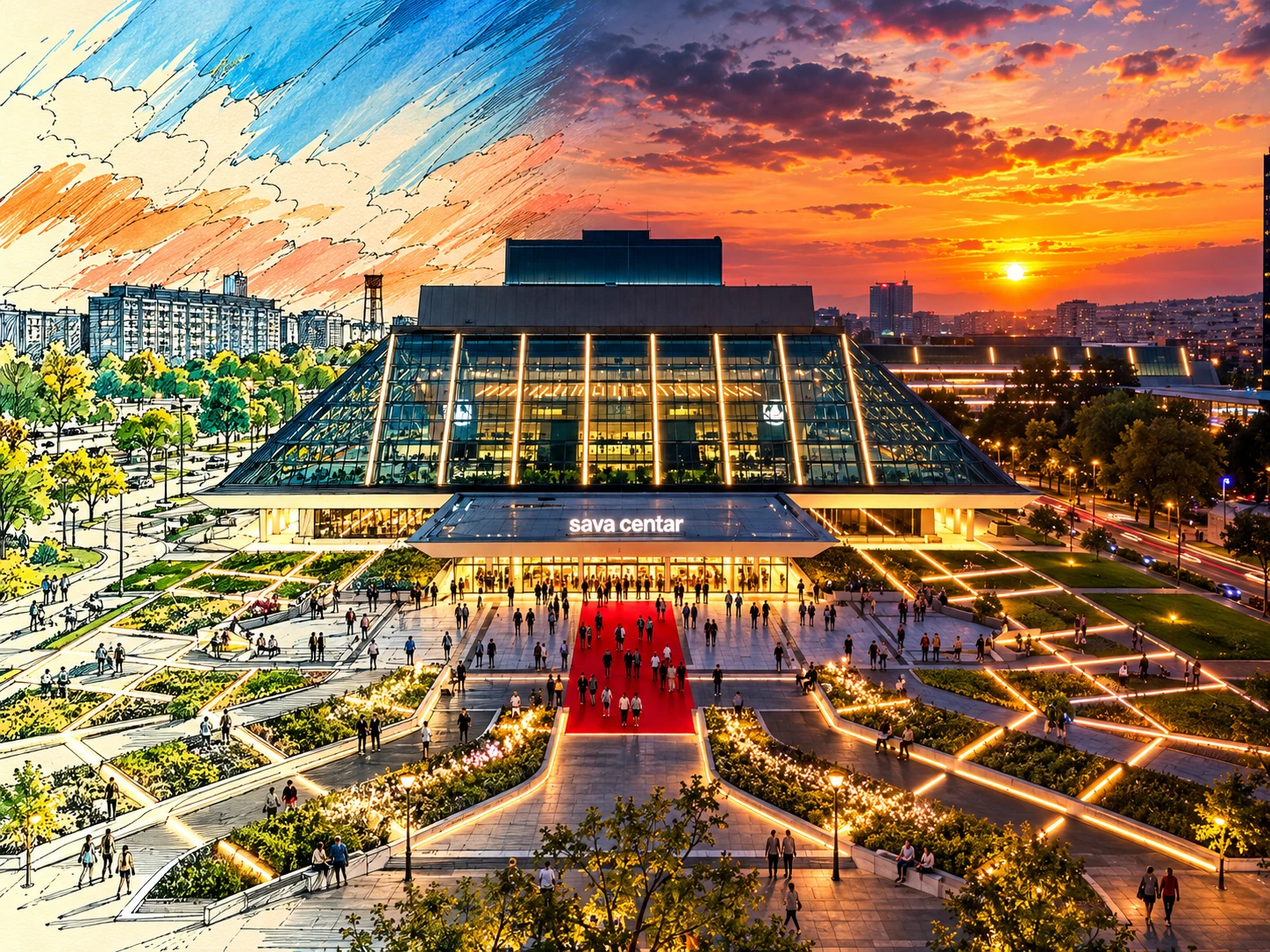
Even if you are not attending an event, the Sava Center area gives you a useful bridge between landmark architecture and the everyday working rhythm of New Belgrade. From here, the central residential blocks become much easier to explore.
New Belgrade makes more sense when you stop looking only for individual monuments and start noticing how congress halls, housing, offices, open space and transport were designed as parts of one larger city.
Belgrade Arena and the event district
Belgrade Arena is one of the city’s main venues for major concerts, sport and large-scale events. On event nights, this part of New Belgrade changes character: transport, restaurants, hotels and pedestrian flows all become part of the experience.
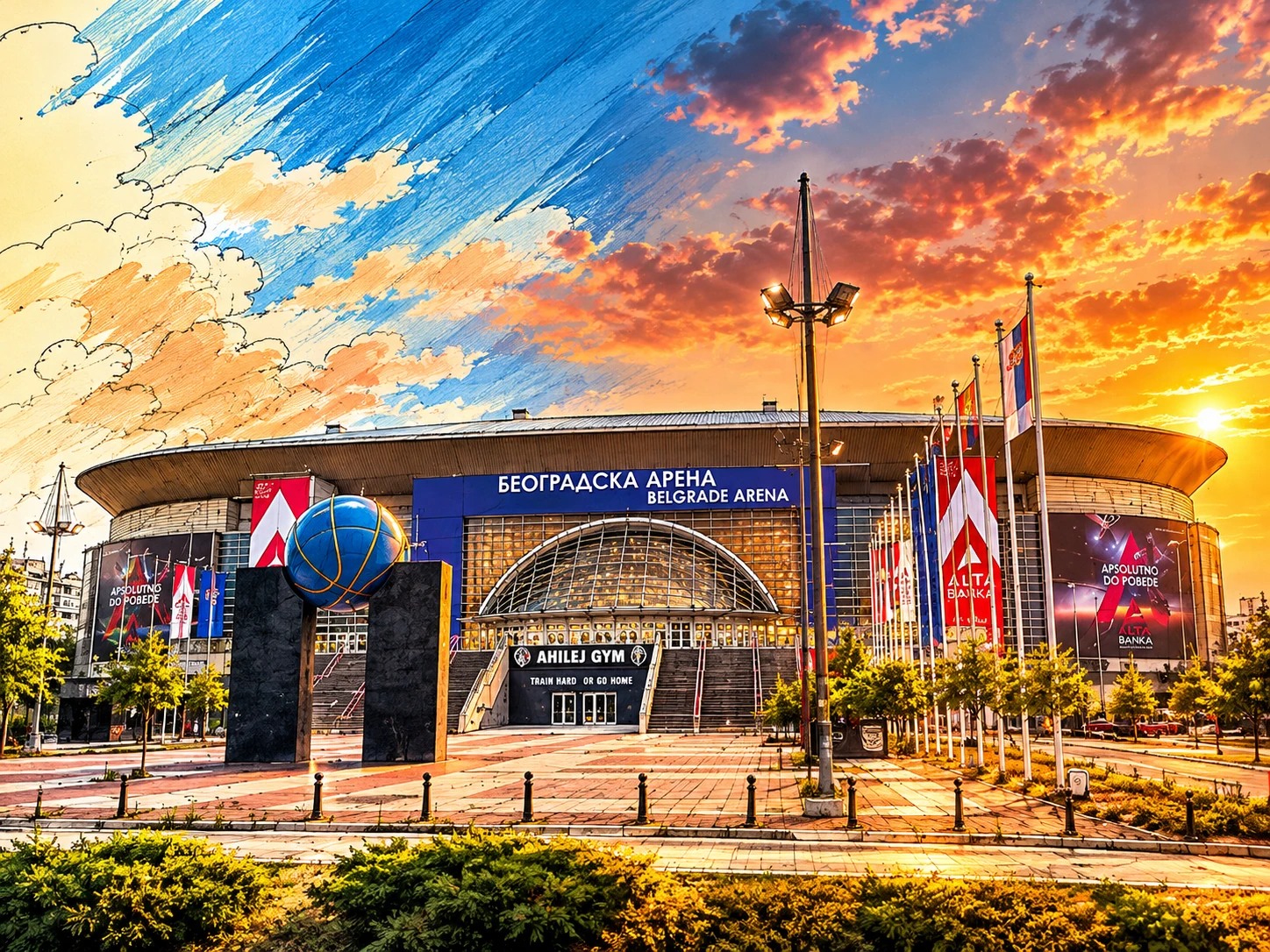
If the Arena is the reason you are coming to Belgrade, staying nearby can be much more useful than choosing a prettier address across the river and crossing the city before and after the event.
Check the official event schedule and your entrance information before planning dinner, transport or your return after the event. Large events can change the normal rhythm around the Arena.
Walk inside the blocks, not only along the boulevards
New Belgrade’s numbered blocks are not just addresses. They are the key to understanding how the district was intended to work as a lived city.
Blocks 21–23 are particularly useful for a first architecture-focused visit. Move away from the traffic edge and look inside: pedestrian paths, schools, trees, playgrounds, lower buildings and towers reveal a very different urban logic from the street walls of Old Belgrade.
The space between buildings is part of the architecture. Notice how greenery, paths and public facilities sit inside the block while major traffic moves around its edges.
Go west for Genex and another side of New Belgrade
The Western City Gate, widely known as Genex Tower, is one of Belgrade’s most recognizable post-war buildings. It also reminds you how far New Belgrade extends: this is not a casual extra stop on a short Ušće walk.
Add the west side when modernist architecture is one of your main reasons for exploring the district, or when your accommodation and daily route already place you in this direction.
Treat Genex primarily as an exterior architecture stop. Do not assume that residential or former commercial spaces are open to visitors.
Slow down along the riverfront
The river is the easiest way to soften New Belgrade’s monumental scale. Around Ušće and farther along the Danube and Sava, walking and cycling routes connect parks, residential areas and views toward the older city.
If architecture is not your main interest, a riverfront route can be the best introduction to New Belgrade. You still see the district’s skyline and planning, but the day feels more relaxed and less like an architecture study.
Choose your New Belgrade visitor zone
Your experience changes dramatically depending on which part of New Belgrade you choose. Think in visitor zones, not one generic neighborhood.
Ušće & Park
River views, Museum of Contemporary Art, open green space and an easy visual connection with Old Belgrade and Zemun.
Sava Center & Blocks 21–23
Modernist architecture, congress life and some of the best places to understand New Belgrade’s original urban scale.
Belgrade Arena district
Best when a concert, basketball game or major event is central to your trip.
Genex & west side
Add this zone when twentieth-century architecture is a priority or your stay already places you west of the central blocks.
Sava residential blocks
Better for riverfront walks, cycling and seeing New Belgrade as a place people live rather than a sequence of landmarks.
How much time do you have?
New Belgrade is too large for one generic route. Choose your time and travel style, and we’ll build an instant plan around coherent visitor clusters.
Your New Belgrade route
How to get around New Belgrade
Walk when you are inside one visitor cluster. Use public transport or a taxi when you move between Ušće, the central blocks, the Arena and the west side.
This is one of those parts of Belgrade where forcing every segment into a walk can make the city feel less enjoyable rather than more authentic.
Build the day around one primary cluster and one optional second cluster. That usually produces a better New Belgrade experience than crossing the municipality repeatedly.
Who should stay in New Belgrade?
Stay near the work, not across the river
New Belgrade concentrates offices, hotels, congress activity and major transport corridors in the same part of the city.
Make the Arena easy
If a concert or sporting event is a major part of the trip, staying nearby can simplify the whole evening.
See the city beyond the nineteenth century
Modernist blocks, federal architecture, Sava Center and Genex reveal a completely different chapter of Belgrade.
Change your perspective on Belgrade
If you already know the fortress and old center, New Belgrade gives the city a new scale, skyline and historical context.
Pros and cons of staying in New Belgrade
Why stay here
- Practical for Belgrade Arena and Sava Center.
- Strong business and hotel infrastructure.
- Modern architecture and riverfront open space.
- Useful base when your trip is focused west of the historic center.
- Distinct experience from the old city.
What to consider
- The district is too large to treat as one walking neighborhood.
- Your exact block or zone matters.
- Old-town atmosphere is across the river, not outside your hotel.
- Some architecture stops are exterior-only rather than tourist attractions.
- Event days can change traffic and pedestrian patterns.
Where to stay in New Belgrade
For concerts, sport and major events
Choose this area when the Arena is a fixed point in your itinerary.
For conferences and business trips
A practical central New Belgrade base with hotels, offices and major venues nearby.
For riverfront and easy city contrast
Best if parks, the museum, shopping and quick visual access to Old Belgrade matter.
For airport-side and architecture priorities
Consider this direction when your daily route already points west or Genex is part of your plan.
Do not choose a property only because it says “Novi Beograd.” Check the exact block, your event or business destination and how you expect to cross the city during the trip.
Choose your base in New Belgrade
Choose your block around the places you actually need to reach. A New Belgrade address alone does not guarantee a short journey to your meeting or event.
New Belgrade, Stari Grad or Zemun?
Classic sightseeing
Start with Stari Grad. Choose it for Knez Mihailova, Kalemegdan and the old central city.
Modern Belgrade
Start with New Belgrade. Focus on Ušće, modernist blocks, Sava Center and the Arena depending on your interests.
Historic riverside atmosphere
Continue to Zemun for Gardoš, the Danube and a much older street pattern.
New Belgrade + Zemun
The contrast between planned twentieth-century New Belgrade and historic Zemun makes the two areas especially interesting together.
Frequently asked questions
Is New Belgrade a good area to stay in Belgrade?
Yes. It is particularly practical for business travelers, event visitors, architecture fans and travelers who prefer newer hotels and modern city infrastructure.
Is New Belgrade walkable?
Individual zones are walkable, but the district is too large to treat as one continuous sightseeing walk. Walk within clusters and use transport between them.
What should I see first in New Belgrade?
Ušće is the easiest first cluster: riverfront space, the Museum of Contemporary Art and a clear view of how New Belgrade sits opposite the historic city.
Is New Belgrade the same as Zemun?
No. The two areas border each other, but Zemun is an older historic town with a different street pattern, architecture and atmosphere.
Should first-time visitors stay in New Belgrade or Stari Grad?
Choose Stari Grad for classic sightseeing outside your door. Choose New Belgrade when business, events, the Arena, Sava Center or modern-city convenience matters more.
Permanent landmarks are separated from details that can change. Check current event schedules, museum access, venue entry, public transport and temporary construction before making them essential to your itinerary.
Sources & editorial notes
- Official: Tourist Organization of Belgrade — New Belgrade landmarks and visitor orientation.
- Official: Museum of Contemporary Art — location and visitor information.
- First-party: Sava Center — history, venue role and current complex information.
- First-party: Arena Beograd — current venue identity, events and visitor information.
- First-party: UŠĆE Shopping Center — current visitor and access information.
- Secondary local source: Belgrade Turtle — architecture, block context and route research.