
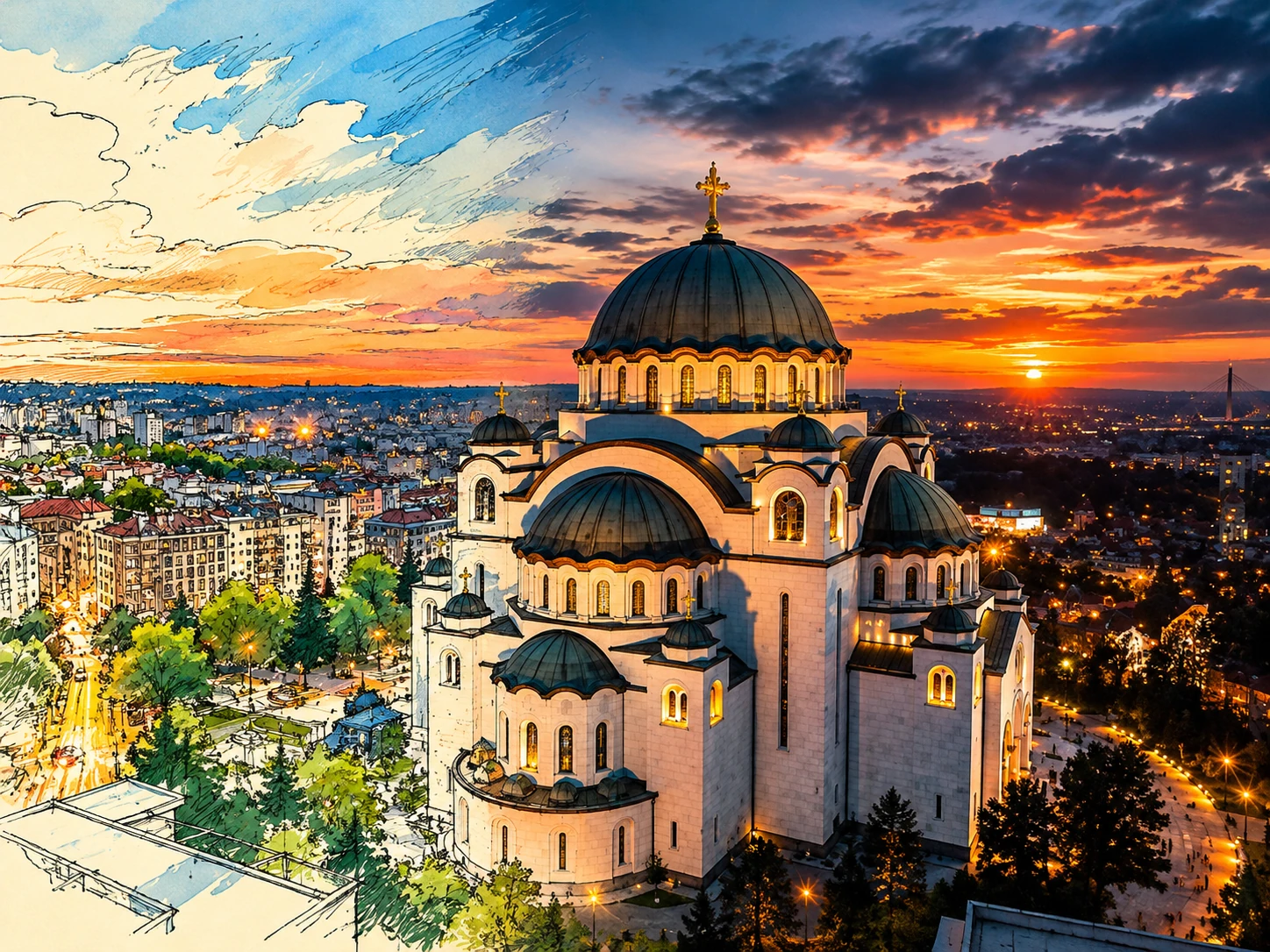
Is Vračar a good area to stay in Belgrade?
Yes — especially if you want a central base that still feels residential. Vračar gives you major cultural landmarks, cafés and restaurants without placing you directly inside the busiest sightseeing streets.
It works particularly well for couples, independent travelers, repeat visitors and anyone who likes discovering a city through neighborhood life as much as through major attractions.
You want local central Belgrade
Cafés, restaurants, culture and everyday streets matter as much as being close to the major sights.
You want maximum sightseeing convenience
Kalemegdan, Knez Mihailova and the historic pedestrian core are your main priorities.
In Vračar, your exact street matters. Choose the micro-location first, then compare the property.
Start with the Temple of Saint Sava
The Temple of Saint Sava is Vračar’s defining landmark and one of the easiest places to orient yourself when exploring the neighborhood.
Its scale changes the character of the surrounding streets. Spend some time on the plateau, then continue into Vračar rather than treating the temple as a standalone stop.
Saint Sava works best as the beginning of a Vračar route. From here, continue toward Krunska, the Tesla Museum or Kalenić depending on how much time you have.
Visit the Nikola Tesla Museum
The Nikola Tesla Museum is on Krunska Street and fits naturally into a wider Vračar walk. The museum is dedicated to Tesla’s life and work and holds personal material, documents and models connected with his legacy.
If the museum is essential to your day, check current access and opening information before you build the rest of your route around it.
Walk Krunska and Njegoševa
Krunska and Njegoševa show a quieter and more intimate side of central Belgrade. Older residential architecture, diplomatic buildings, cafés, balconies, trees and small shops make the walk itself part of the visit.
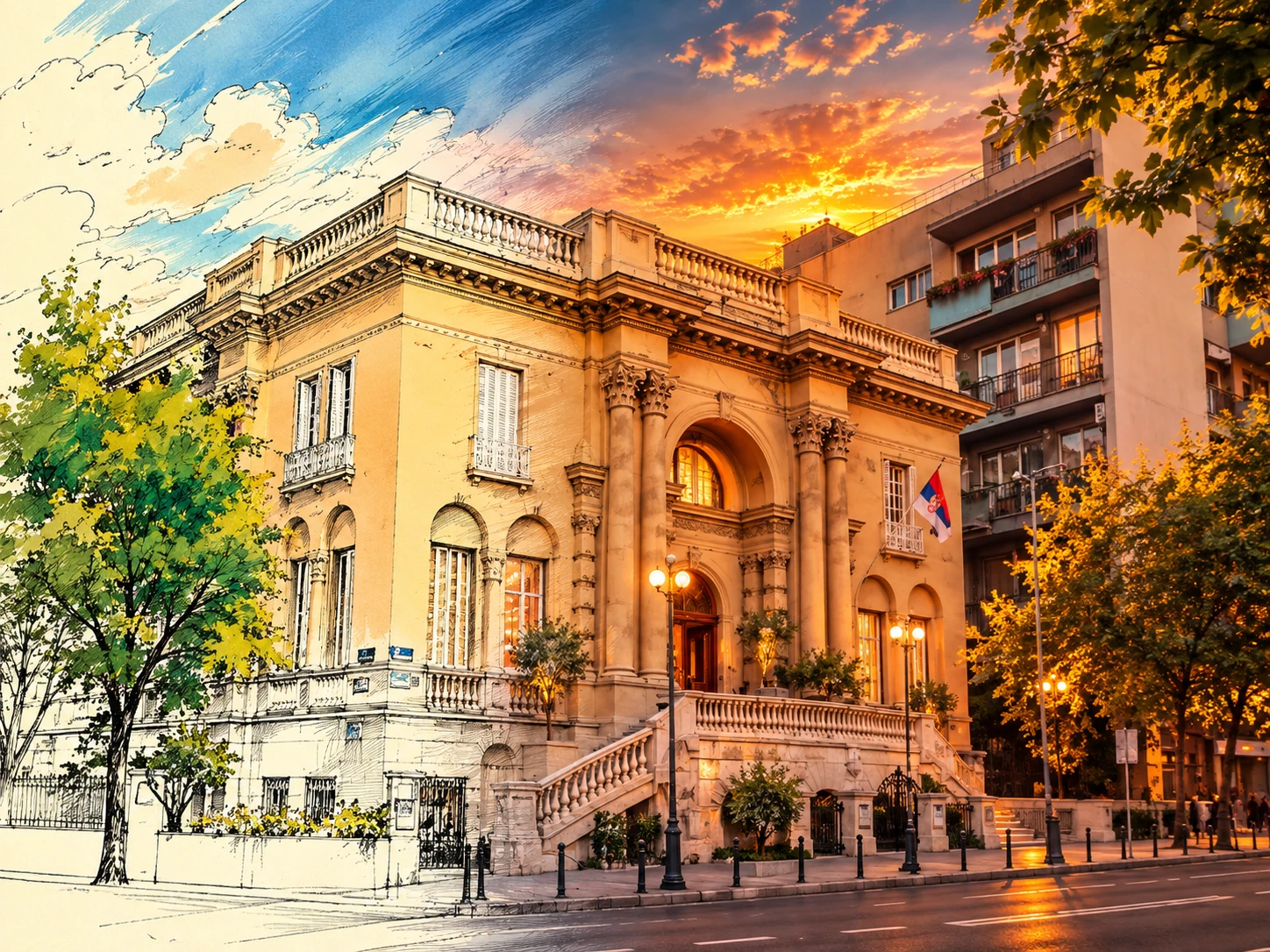
Do not treat the walk between Saint Sava, the Tesla Museum and Kalenić as dead travel time. Notice façades, entrances, balconies and the contrast between older houses and newer residential buildings.
Experience local life at Kalenić Market
Kalenić is one of the easiest places in Vračar to see the neighborhood in everyday mode. The market and surrounding streets mix produce stalls, bakeries, cafés, restaurants, small shops and residential life.
You do not need a complicated plan here. Walk through the market, explore the nearby streets and leave room for an unplanned coffee or food stop.
If food and markets are important to you, give Kalenić more time than a quick photo stop. Its value is the everyday rhythm around it.
Slow down in Čubura
Čubura gives Vračar a smaller, more intimate scale than the area around Saint Sava. Cafés, neighborhood restaurants and the memory of older Belgrade kafana culture shape the atmosphere.
There is no single must-see attraction here. Čubura works better when you walk, stop for coffee or food and let the neighborhood set the pace.
Vračar is not only Saint Sava and Tesla. Čubura is where the guide shifts from landmarks to neighborhood character.
Vračar changes street by street
Think of Vračar as several connected micro-areas rather than one uniform neighborhood. You do not need to cover all of them on the same visit.
Saint Sava & Neimar
Start here for the temple, architecture and Vračar’s most recognizable skyline.
Krunska & Njegoševa
Best for the Tesla Museum, cafés, older residential architecture and a slower central walk.
Kalenić
Market life, bakeries, food, morning activity and local routines.
Čubura
Smaller streets, cafés, restaurants and a more intimate neighborhood feel.
Crveni Krst
A more residential layer for visitors who want to continue beyond the classic central Vračar route.
How much time do you have?
Choose your time and the kind of Vračar you want. We’ll build an instant route from the same verified places used throughout this guide.
Your Vračar route
Cafés and restaurants are part of the Vračar experience
Vračar does not depend on one entertainment strip. Cafés and restaurants appear across different streets and micro-areas, which makes the neighborhood especially easy to enjoy without planning every stop in advance.
Keep some flexibility. The best local stop may be the one you notice while walking between the places you already planned to see.
Who should stay in Vračar?
Easy evenings close to home
Cafés, restaurants and neighborhood walks work naturally around a short city break.
See central Belgrade differently
Stay outside the classic sightseeing core without leaving central city life behind.
Build the day around local stops
Kalenić, bakeries, cafés and neighborhood restaurants are easy to combine.
Two major anchors plus street context
Saint Sava and the Tesla Museum give structure to a wider architecture-and-neighborhood walk.
Pros and cons of staying in Vračar
Why stay here
- Central but more residential than the historic pedestrian core.
- Saint Sava and the Nikola Tesla Museum are within the neighborhood.
- Strong café, market and restaurant culture.
- Several distinct micro-areas to choose from.
- Good fit for slower, more local city breaks.
What to consider
- Your exact street matters more than the district name alone.
- Major roads can be busy.
- Kalemegdan and Knez Mihailova are not immediately outside your door.
- Parking should be checked before arriving by car.
Where to stay in Vračar
For a landmark-led stay
Choose this side if you want the temple and the monumental side of Vračar close by.
For culture and central residential streets
A strong fit for cafés, architecture and the Nikola Tesla Museum.
For food and everyday neighborhood life
Choose this side if the market, bakeries, restaurants and local routines matter most.
For city connections
Useful when wider central transport access matters more than a quieter side street.
Do not choose a property only because it says “Vračar.” Check the exact street and what you want immediately around your accommodation.
Choose your base in Vračar
Use the micro-area guidance above to choose your base. Compare the exact street, access and property facilities with the rest of your itinerary.
Vračar or Stari Grad?
Historic Belgrade
Start with Stari Grad. Focus on Knez Mihailova and Kalemegdan. Pair it with Dorćol.
Local central Belgrade
Start with Vračar. Focus on Saint Sava, Krunska and Kalenić. Pair it with the historic center when you want classic sightseeing.
Frequently asked questions
Is Vračar a good area to stay in Belgrade?
Yes. It is particularly strong for visitors who want a central location with more neighborhood character, cafés, restaurants and culture.
What is Vračar best known for?
The Temple of Saint Sava is its most recognizable landmark. Vračar is also home to the Nikola Tesla Museum, Kalenić Market and several distinctive residential and café areas.
How much time should I spend in Vračar?
A focused route can work in about two hours. Half a day gives you much more room for Krunska, Kalenić, Čubura and a relaxed café or meal stop.
Is the Nikola Tesla Museum in Vračar?
Yes. The Nikola Tesla Museum is located on Krunska Street in Vračar.
Should first-time visitors choose Vračar or Stari Grad?
Choose Stari Grad for maximum classic sightseeing convenience. Choose Vračar if you are happy to trade immediate access to the historic pedestrian core for more residential atmosphere and local life.
Permanent landmarks are separated from details that can change. Check time-sensitive museum access, road works, events and other operational information close to your visit.
Sources & editorial notes
- City of Belgrade — Saint Sava, Krunska Street and neighborhood context.
- Belgrade Turtle — secondary local perspective used for route and neighborhood research.
- Local stories are treated separately from verified factual claims.