
Is Stari Grad a good area to stay in Belgrade?
Yes — especially on a first trip. Stari Grad gives you the highest concentration of classic sightseeing, culture, restaurants and central walking routes in one area.
It is also the easiest place to understand Belgrade quickly. You can start at Republic Square, walk Knez Mihailova, continue into Kalemegdan and the Fortress, then choose whether your evening moves toward Skadarlija, Dorćol or the Sava-side streets.
You want Belgrade outside your door
Major landmarks, museums, pedestrian streets and evening areas are all close enough to build much of your day around walking.
You want a more residential central base
You are happy to trade immediate access to the historic core for cafés, neighborhood streets and a more local everyday rhythm.
“Stari Grad” covers several very different micro-areas. Choose the exact part of the historic center first — pedestrian core, Kalemegdan, Skadarlija, Dorćol edge or the quieter Sava-facing streets — then compare accommodation.
Start at Republic Square
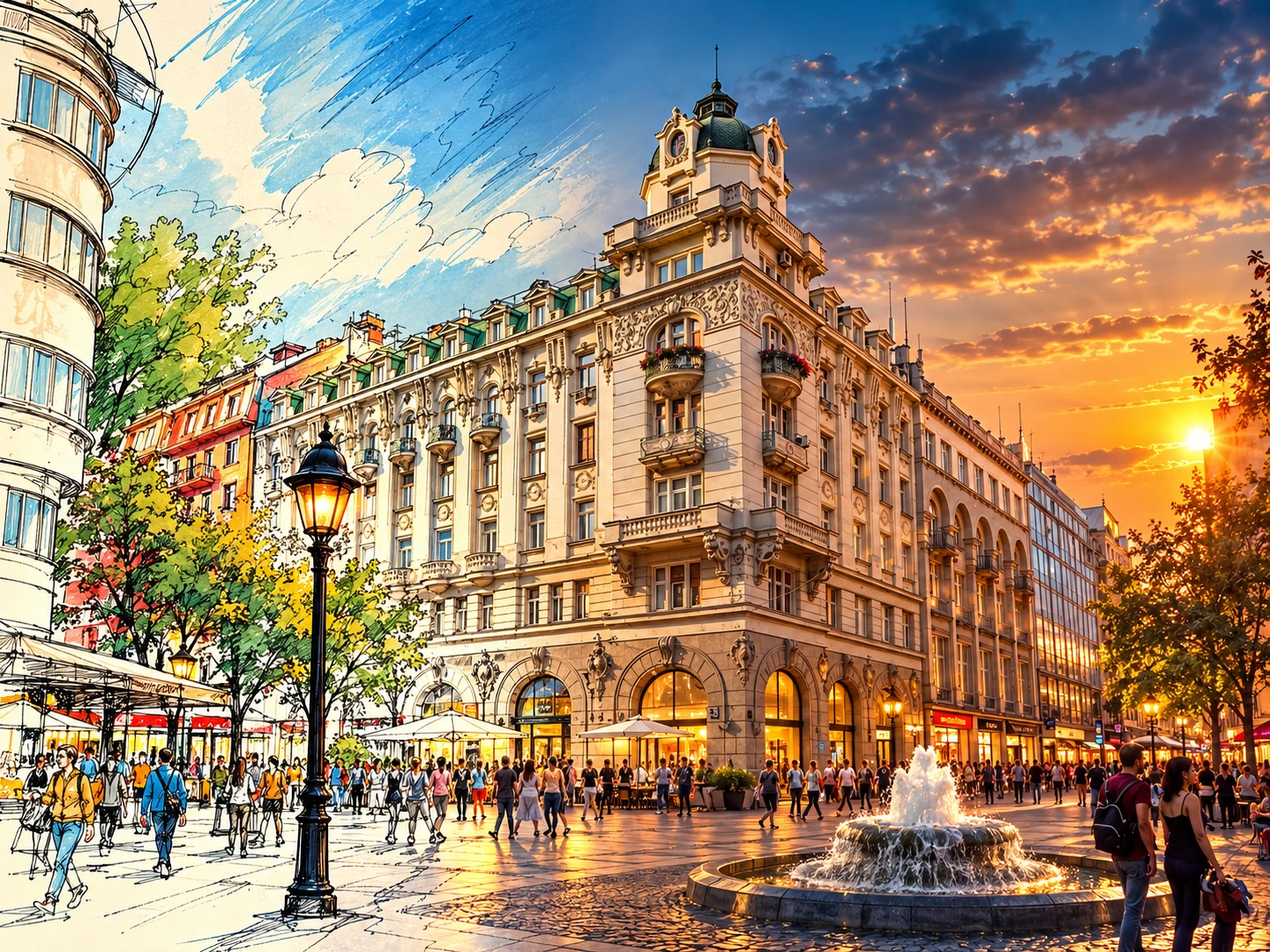
Republic Square is one of the easiest orientation points for a first visit. The National Museum and National Theatre frame the square, while Knez Mihailova, Skadarlija and the rest of the central historic core spread out from here.
If you have limited time, this is a practical place to begin because you can make an immediate decision: go west toward Knez Mihailova and Kalemegdan, north toward Dorćol, or east toward Skadarlija.
Republic Square works better as a starting point than as a destination that needs a long standalone visit. Use it to orient yourself, then continue into the part of Stari Grad that matches your available time.
Walk Knez Mihailova
Knez Mihailova is the main pedestrian axis through central Belgrade. It links Republic Square and the Terazije side of the center with Kalemegdan and Belgrade Fortress.
Shops, cultural institutions, historic façades, cafés and street activity make the route feel busy throughout much of the day. For first-time visitors, it is the simplest way to move through the historic core without constantly checking a map.
Do not treat Knez Mihailova only as a shopping street. Look above ground-floor level: the façades and cultural buildings tell you much more about the street than the shopfronts.
End the classic walk at Belgrade Fortress and Kalemegdan
For a separate family outing in the area, see our Belgrade Zoo visitor guide. Allow its own time and admission budget.
For routes, visitor access and optional interiors, read our Belgrade Fortress & Kalemegdan visitor guide.
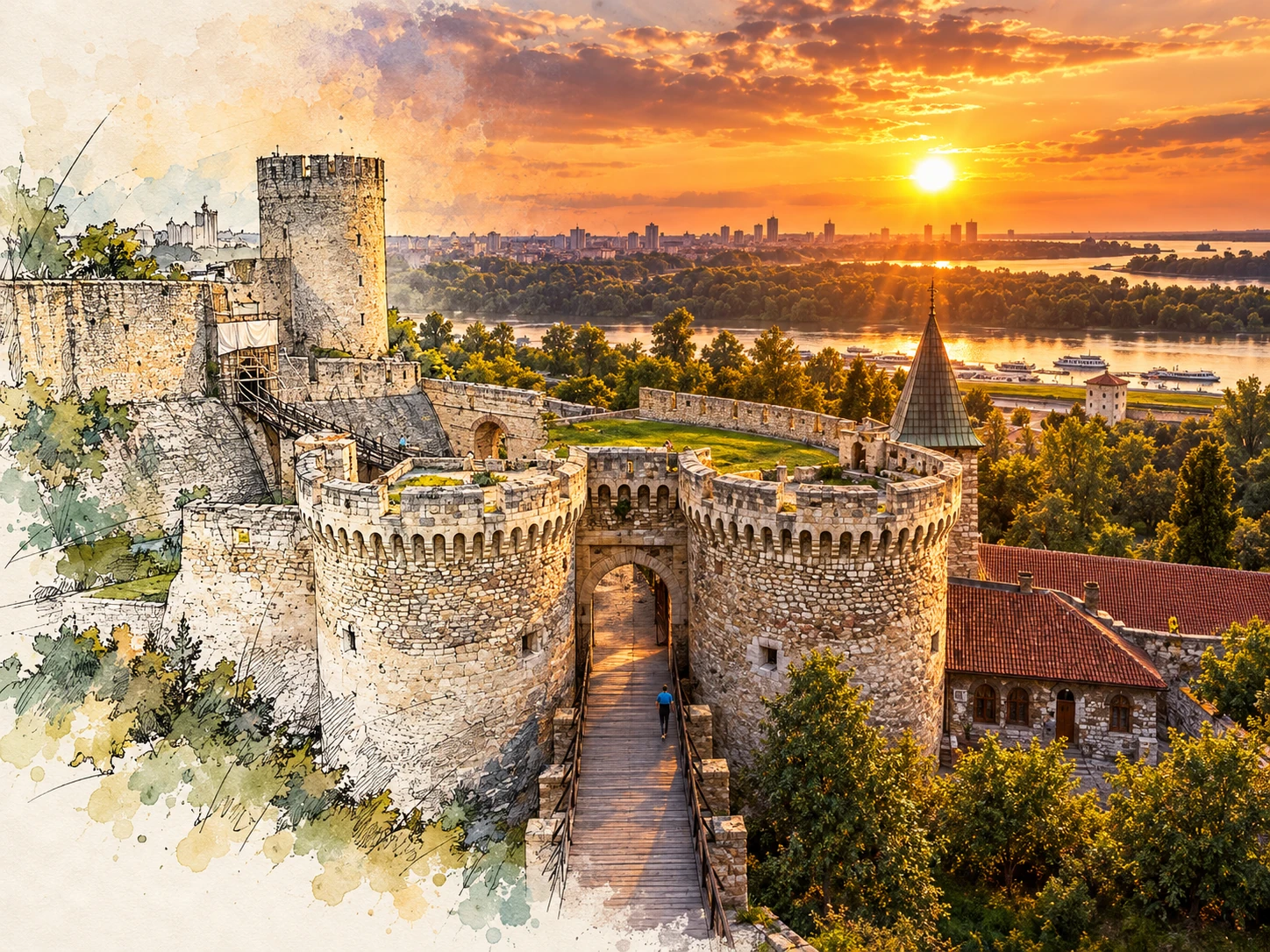
Belgrade Fortress sits above the confluence of the Sava and Danube and is one of the city’s essential historic and visual anchors. The wider area includes the Upper and Lower Town, Kalemegdan Park and the Victor monument.
For many visitors, the best first-time route is simple: Republic Square → Knez Mihailova → Kalemegdan → Fortress. It gives you the central pedestrian city and the river landscape in one continuous walk.
The view from the fortress explains Belgrade better than almost any city map: historic Stari Grad behind you, the Sava and Danube below, New Belgrade across the river and Zemun farther along the Danube.
Take the quieter route through Kosančićev venac
When you want historic Belgrade without the constant flow of Knez Mihailova, head toward Kosančićev venac. Cobbled streets, older houses, cultural landmarks and views toward the Sava give this part of the center a more intimate scale.
This is one of the best places in Stari Grad to slow the day down. It works naturally after the Fortress or before descending toward the Sava-side streets.
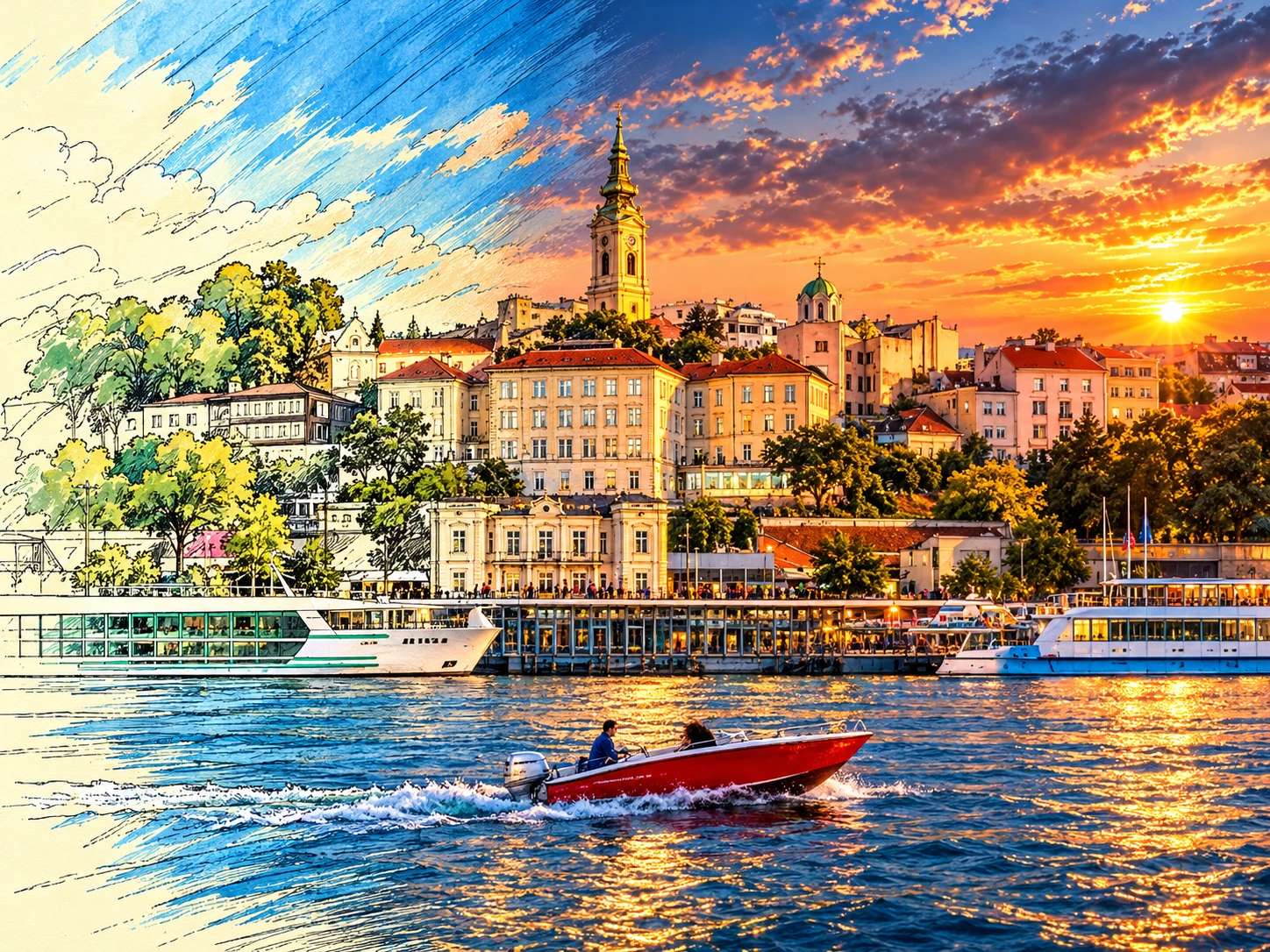
Do not rush Kosančićev venac as a shortcut. This is the part of the historic center where the slower walk is the experience.
Save Skadarlija for later in the day
Skadarlija brings a different mood to Stari Grad: cobbled street, traditional restaurants and the memory of Belgrade’s former bohemian scene.
It works especially well as an evening counterpoint to the daytime sightseeing core. You do not need to combine every central attraction with Skadarlija; it makes more sense when food and old-Belgrade atmosphere are part of what you want from the evening.
If traditional dining is not your priority, you can keep Skadarlija short and spend more evening time in Dorćol or elsewhere in the center.
Use Dorćol when you want more neighborhood character
Dorćol is part of the wider Stari Grad municipality, but its identity is strong enough to treat it as a neighborhood in its own right.
Move toward Dorćol when you want cafés, residential streets, nightlife and a stronger everyday-city feel after the classic central sights.
First trip: Stari Grad essentials by day, Dorćol for a slower late afternoon or evening.
Choose the right part of Stari Grad
Stari Grad is not one uniform experience. Your exact micro-location changes what your mornings, evenings and walks feel like.
Republic Square & Knez Mihailova
Choose this core when immediate sightseeing access matters more than quiet streets.
Kalemegdan & Fortress side
Best for historic surroundings, park access and the river-facing edge of the old city.
Kosančićev venac
Cobbled streets, older architecture and a slower historic atmosphere above the Sava.
Skadarlija
Best when traditional dining and old-Belgrade evening atmosphere are central to your trip.
Dorćol edge
Choose this direction for cafés, nightlife and stronger neighborhood character while staying central.
How much time do you have?
Choose your time and the kind of historic Belgrade you want. We’ll build an instant route through the same places used throughout this guide.
Your Stari Grad route
Who should stay in Stari Grad?
The easiest introduction to Belgrade
The major historic sights and central streets connect naturally without complicated transport planning.
Use your limited time well
Stay close to the landmarks and spend less of a short trip crossing the city.
Museums and heritage close together
National institutions, protected urban areas, theatres and historic landmarks are concentrated here.
Build the day on foot
Stari Grad is one of the strongest parts of Belgrade for linking major visitor areas without a vehicle.
Pros and cons of staying in Stari Grad
Why stay here
- Major historic sights are concentrated in one central area.
- Strongest sightseeing walkability for a first trip.
- Museums, theatres, cafés and restaurants are close together.
- Easy to combine daytime landmarks with evening areas.
- Very efficient for short stays.
What to consider
- The busiest streets can feel very visitor-oriented.
- Nightlife and noise vary significantly by micro-location.
- Parking requires planning before arrival.
- Properties with the same “Stari Grad” label can feel completely different.
- Prices can reflect the convenience of the central location.
Where to stay in Stari Grad
For first-trip convenience
Choose the pedestrian core when classic sightseeing and immediate central access matter most.
For historic surroundings
Best if the Fortress, park and quieter edge of the old city are important to you.
For a quieter old-city mood
Choose this area for cobbled streets, older architecture and a slower atmosphere above the Sava.
For evenings and neighborhood character
A better fit when restaurants, cafés, nightlife and local street life matter as much as landmarks.
Do not choose only by the label “Stari Grad.” Check the exact street, evening atmosphere and which part of the historic center you want outside your door.
Choose your base in Stari Grad
Choose the historic centre for a sightseeing-led trip. Compare the exact street and evening atmosphere before choosing a property.
Stari Grad, Vračar or Dorćol?
Historic Belgrade
Start with Stari Grad. Focus on Knez Mihailova, Kalemegdan and the Fortress. Pair it with Dorćol when you want more neighborhood life.
Local central Belgrade
Continue to Vračar for cafés, residential streets, Saint Sava and the Tesla Museum.
Cafés, nightlife & neighborhood character
Continue to Dorćol while keeping the historic center within easy reach.
Convenience versus local feel
Stari Grad wins on first-trip efficiency; Vračar and Dorćol often feel more residential.
Frequently asked questions
Is Stari Grad a good area to stay in Belgrade?
Yes. It is one of the strongest choices for first-time visitors, sightseeing and short city breaks.
Is Stari Grad walkable?
Yes. Republic Square, Knez Mihailova, Kalemegdan, the Fortress, Skadarlija and much of the historic center can be combined naturally on foot.
How much time should I spend in Stari Grad?
Two hours works for a focused essentials route. Half a day is better for the central core plus Kalemegdan and a slower stop. A full day gives you room for museums, Kosančićev venac, Skadarlija or Dorćol.
Is Dorćol part of Stari Grad?
Yes. Dorćol is part of the wider Stari Grad municipality but has a distinct neighborhood identity of its own.
Should first-time visitors stay in Stari Grad?
For most first-time visitors who prioritize sightseeing, Stari Grad is one of the simplest and most efficient bases in Belgrade.
Permanent landmarks and urban structure are separated from details that can change. Check current museum hours, exhibitions, events, temporary access and transport conditions close to your visit.
Sources & editorial notes
- Official: Tourist Organization of Belgrade — Stari Grad, Knez Mihailova, Republic Square and Belgrade Fortress.
- Official: City of Belgrade — Kosančićev venac historical and urban context.
- Local stories and changing visitor information are kept separate from verified permanent facts.